
Shopware vs. Adobe Commerce for B2B Growth
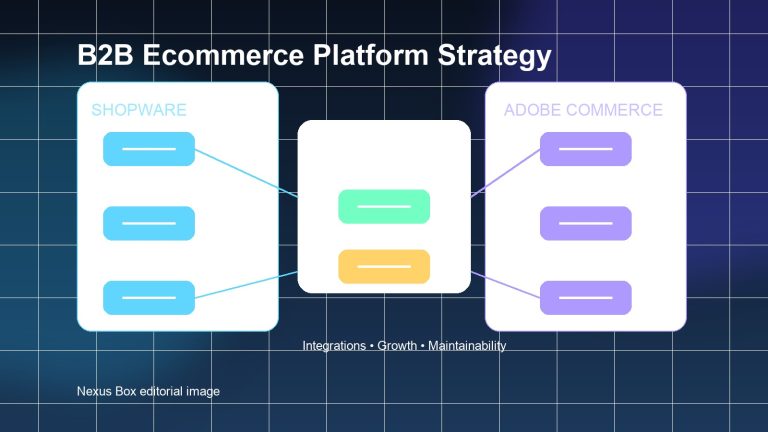
For growing B2B organizations, ecommerce platform decisions are rarely just about the storefront. The real question is whether the platform can support account-based pricing, custom catalogs, ERP or inventory integrations, sales-team workflows, procurement expectations, and the ongoing maintenance discipline required to keep revenue moving.
That is why the Shopware versus Adobe Commerce conversation deserves a strategic frame. Both platforms can serve serious ecommerce operations. Both can support complex catalogs and custom buying journeys. But they fit different operating models, budget expectations, and technical roadmaps.
Start with the business model, not the feature list
A feature checklist can make two platforms look similar on paper. In practice, the better choice depends on how your business sells. A manufacturer with negotiated pricing, distributor portals, and ERP-driven inventory has different needs than a specialty retailer expanding into wholesale. A regional service company selling parts, subscriptions, and appointment-based support has another set of requirements entirely.
Before comparing demos, leadership teams should map the revenue workflow: how customers are approved, how pricing is assigned, how orders move to fulfillment, where tax and shipping rules live, who updates product data, and which systems must remain the source of truth. That map usually reveals whether the project is mostly a storefront upgrade or a broader operational integration initiative.
Where Shopware often fits well
Shopware is attractive for businesses that want modern ecommerce architecture, flexible content and commerce experiences, and room to shape custom workflows without inheriting unnecessary platform weight. It can be a strong fit for B2B teams that need tailored customer experiences, multichannel growth, or a cleaner path away from aging ecommerce systems.
The platform also encourages a thoughtful separation between the commerce engine and the experience layer. For companies that need product storytelling, landing pages, segmented customer journeys, or integrations with outside systems, that flexibility can matter. A qualified Shopware development partner can help translate that flexibility into a stable implementation plan rather than a collection of disconnected customizations.
Shopware may be especially compelling when a team wants to modernize without recreating every historical process exactly as it existed in a legacy platform. That makes discovery and process review important. The goal is not to rebuild old friction in new software; it is to identify which workflows should be preserved, improved, automated, or retired.
Where Adobe Commerce still earns attention
Adobe Commerce, historically known through the Magento ecosystem, remains a serious option for complex ecommerce operations with large catalogs, mature merchandising teams, sophisticated promotions, and established extension or integration investments. For many businesses, the question is not whether Adobe Commerce can support the requirement. It is whether the organization is prepared to maintain the platform responsibly.
Adobe Commerce environments need disciplined patching, extension audits, performance monitoring, hosting architecture, and upgrade planning. When those practices are in place, the platform can provide a powerful foundation. When they are neglected, technical debt accumulates quickly and shows up as slow pages, fragile checkout behavior, security exposure, or costly emergency development.
For teams already invested in the Magento or Adobe Commerce ecosystem, a platform change should not be assumed. A structured audit may show that the better path is targeted cleanup, performance work, extension consolidation, or an upgrade roadmap. Nexus Box supports that kind of evaluation through Magento and Adobe Commerce development services focused on long-term maintainability, not just one-time fixes.
The integration question is usually the deciding factor
Most B2B ecommerce projects become integration projects. Pricing may come from an ERP. Product data may live in a PIM. Customers may need contract-specific catalogs. Sales teams may require quote workflows. Finance may need clean payment, tax, and reconciliation data. Operations may need inventory accuracy across locations.
Those requirements should be evaluated before platform selection is finalized. The most expensive ecommerce mistakes often happen when a company chooses a platform based on the visible storefront, then discovers that the hidden operational work is harder than expected. A partner-led technical discovery can expose API limitations, data cleanup needs, middleware decisions, and phased rollout options early enough to control risk.
Questions decision-makers should ask
- Which system is the source of truth for product, inventory, customer, and pricing data?
- Do buyers need self-service purchasing, quote requests, approval flows, or sales-rep support?
- How often will integrations change as the business grows?
- What is the internal team’s capacity for platform maintenance, QA, and security updates?
- Is the current pain caused by the platform itself, or by years of unplanned customization?
Clear answers help separate platform preference from business fit. They also help define the right development partnership model: implementation, migration, rescue work, long-term support, or a phased modernization plan.
A practical takeaway for growing B2B teams
If your ecommerce platform is starting to limit growth, do not begin with a redesign brief. Begin with an operational review. Document the buying journey, integration points, performance issues, maintenance history, and future revenue goals. Then compare Shopware and Adobe Commerce against that reality.
For businesses in Winchester, Northern Virginia, the Shenandoah Valley, and beyond, Nexus Box helps teams evaluate ecommerce platforms with both technical depth and business context. The best platform decision is not the one that sounds most impressive in a sales deck. It is the one your team can operate, extend, secure, and improve as customer expectations continue to rise.