
Ecommerce Migration Planning Without the Fire Drill
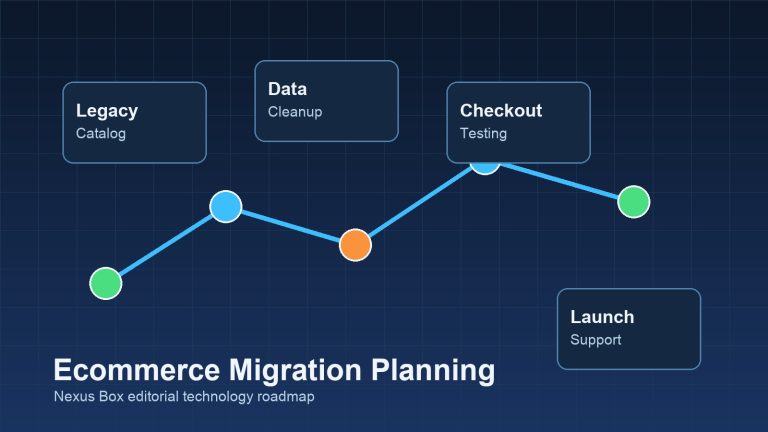
Ecommerce migrations usually start with an exciting business goal: better performance, cleaner operations, stronger merchandising, a more modern checkout, or a platform that finally fits how the company sells. The trouble starts when the migration is treated like a theme swap instead of an operational project. For retailers, distributors, subscription businesses, and service companies that depend on online transactions, a platform move touches revenue, inventory, customer accounts, analytics, fulfillment, and support workflows at the same time.
That is why the best migrations are planned before the first template is rebuilt. Whether a business is moving from a legacy store to Shopify, modernizing a Magento or Adobe Commerce installation, evaluating BigCommerce, or connecting a custom ecommerce stack, the planning phase determines whether launch week feels controlled or chaotic.
Start with the business reason, not the platform logo
A migration should be anchored to a business outcome. Common goals include reducing maintenance risk, simplifying catalog management, improving checkout conversion, supporting wholesale workflows, preparing for growth, or lowering the amount of custom code that must be maintained. Without a clear goal, teams can spend months recreating old problems inside a new platform.
Before selecting features or apps, document what must improve. Is the current site too slow? Are staff members fighting the admin every day? Are integrations brittle? Are customer service issues coming from confusing order flows? A good migration plan separates “must keep,” “must fix,” and “can retire” items so the new store is not just a copy of the old one.
Audit the catalog and data before rebuilding pages
Product data is often the hidden risk in ecommerce migration planning. Titles, variants, SKUs, categories, images, pricing rules, inventory fields, customer groups, and custom attributes may all behave differently in the next platform. If data issues are discovered during launch week, the team is forced to choose between delaying the project or publishing a messy store.
Run a catalog audit early. Identify duplicate products, obsolete SKUs, missing images, inconsistent option names, outdated descriptions, and special pricing rules. For B2B or wholesale operations, pay special attention to customer-specific pricing, order minimums, tax rules, shipping logic, and account permissions. These details are not edge cases; they are often the reason the business needs ecommerce in the first place.
Map integrations as revenue infrastructure
Modern ecommerce sites rarely stand alone. They connect to payment gateways, shipping carriers, ERPs, inventory systems, email platforms, tax tools, CRMs, analytics, ad platforms, fraud tools, and customer service systems. A migration plan should list each integration, its owner, its data direction, and what happens if it fails.
This is where many projects become expensive late in the process. A plugin or app may cover 80 percent of a workflow, while the remaining 20 percent is the part that keeps operations running. Teams should test those assumptions before committing to a launch date. Nexus Box works across platforms including Shopify development, WooCommerce, BigCommerce, and Magento/Adobe Commerce, so the practical question is not “which platform is popular?” It is “which platform supports the way this business actually sells?”
Protect SEO, analytics, and customer trust
A store migration can quietly damage visibility if URLs, metadata, redirects, schema, internal links, and indexable content are not reviewed. It can also break measurement if GA4 events, ecommerce tracking, ad pixels, form tracking, or conversion definitions are not rebuilt and tested. The site may look successful on launch day while reporting and search performance degrade in the background.
Create a redirect map for important URLs, preserve high-value content where possible, and verify that product, category, and checkout events are measured correctly. For stores that serve Northern Virginia, Winchester, the Shenandoah Valley, and surrounding markets, local service pages and community-relevant content should also be protected. Search visibility is part of the business asset being migrated.
Test checkout like a business process
Checkout testing should cover more than one successful credit card transaction. Test guest checkout, account checkout, coupons, tax rules, local pickup, shipping rates, failed payments, order confirmation emails, refunds, abandoned cart behavior, mobile screens, accessibility basics, and customer service handoffs. If the business uses wholesale accounts or custom payment terms, include those flows in the test plan too.
It is also wise to test internal operations. Can staff find orders quickly? Do fulfillment teams receive the right data? Are invoices, packing slips, notifications, and inventory updates behaving as expected? A migration succeeds when customers and staff both experience less friction.
Plan launch support before launch day
The launch plan should define who is watching uptime, orders, payments, analytics, logs, customer messages, and integration syncs. It should include rollback criteria, DNS timing, cache clearing, payment gateway mode checks, and a short list of issues that must be fixed immediately versus items that can wait.
For a growing ecommerce business, the practical takeaway is simple: do not let the new platform become the project plan. Build the plan around revenue, operations, data, and customers, then choose the platform and implementation path that supports those realities. A structured ecommerce consulting and training process can help identify risks before they turn into launch-week surprises.
Nexus Box helps businesses approach migrations with that operational lens: platform fit, integration planning, testing, performance, and post-launch care. The goal is not just to move the store. The goal is to move the business forward without creating a fire drill.